Showing posts with label Writing. Show all posts
12/09/2015
An Awesome Announcement
Hey, y'all. For the last couple of weeks I have been working on something I am way excited about. I decided that Hopes and Dreams needed a makeover, but then as I got to thinking, I thought that I needed a new name as well, something that would fit the theme of my blog a bit more.
Please check out Living Aesthetically and subscribe by email or G+. I hope that you all enjoy this new and exciting blog as much as I have been enjoying putting it together.
I will not be getting rid of Hopes and Dreams, but I will not be posting on it anymore. So don't miss anything! Hop on over to to Living Aesthetically. See ya there.
11/29/2015
Three Reasons Why You Should Know Your Characters' MBTI Type
Been a while since I've written a post on writing, so here I be.
Character development is my absolute favorite part about writing. I get so excited (just on the inside) when I start a brand new novel and can start new characters from scratch. It's beautiful to start with a blank piece of paper and be able to create this human being (or some other creature). I have character sheets that I make and they are my favorite to fill out. I get to choose a name, an age that fits with the time/type of novel I am writing. I get to pick hair color, eye color, skin color... And as I write I add onto those character sheets. Hobbies, personality quirks that I didn't know about at first, character traits, their fears... It's fun to create a person. It's fun to get to know that person you created as you write your story.
One of my favorites things to do is take a personality test for my character. I usually use this one. Sometimes it's hard to answer the questions before you have even started writing your novel. Sometimes their personalities change half-way through the story. But answer the questions as accurately as possible to give them a result. Then if you don't know much about their MBTI result, research it extensively. Don't always just read a little bit about it. You can find out what that personality type's triggers are, their irritations, what that type strives for the most, how they usually go about fulfilling goals and dreams. The personality type doesn't take away from the individuality of your character, it will help you develop them more and make them stronger.
So why figure out your characters' MBTI?
It Makes Them More Real
Every person has an MBTI type. Everyone fits somewhere into one of the sixteen types. No, not everyone will fit their personality to the "t", but they will be pretty close. There's subtypes in the personalities which makes them more individual. When you know what type they are and what subtype they fit into, then researching those extensively will help you find what that type does like, doesn't like, what irritates them, what motivates them, etc. It will make them seem more real to the readers, and to yourself.
The Characters Will Relate to the Real World More
As I said above, everyone has a personality type. Whether your character lives on pluto, or a steampunk England, they have to relate to the real world somehow. It kind of goes back to making them seem more real. Yeah, they're fiction, but how do you think Fandoms are made? They're made because the characters seem so real to the readers, that the readers never want them to die out. Sherlock, Supernatural, and those anime shows help the readers relate in a way that they love the characters. They make fanfics, memes, gifs, and quote the characters all the time to help keep them in their life more. They made a connection that they don't ever want to lose. Wouldn't it be awesome for your story to one day have a fandom? I think so.
Creates a Personal Connection with Your Readers
The artistry behind the MBTI and EMBTI's are scientific. They're proven to be accurate. There's great information out there about personality types. You can find out all the information you want about certain types. Sure, you can make personal connections without knowing your character's MBTI results. It's how you write them. Unless you say so, the readers won't know the personality type exactly. Though, when you yourself know exactly what it is, you can more accurately write that into your story. Then readers with the same type will be like "They're like me! I know I am an INTP and she acts just like me." That makes readers so ecstatic about finding out that their new favorite character has the same type as them. Have you ever heard someone say, "I have the same personality type as Sherlock" or "I have the personality type as Harry Potter"? If that's their favorite character, they will be thrilled to know that. Sure you can write the story and never know what their personality type is and leave it up to your readers to try and guess what that might be exactly. It doesn't make it quite so personal or real anymore.
It only takes a couple minutes to take a test for your character and find out their type. If the test is too hard to do for your character, then wait until you've written some of your novel and gotten to know your character better. If it takes a full rough draft before you're able to answer all the questions from your character's perspective, then that's okay. When you go to do another draft, you can fix any inconsistencies.
Do you know what your characters' MBTI is? Do you think it helps make your characters more real? What kinds of things do you like doing when you are developing characters?
If you liked this post, comment and share with a friend!
10/16/2015
Explosions of Ink on Paper
Some of my favorite art is the kind that looks like the artist literally threw paint balls at a blank canvass. Even if at first it looks like a complete mess, it isn't. It's what the artist intended (maybe) and someday that piece of art that looks like an explosion of paint happened will be famous. Abstract art is getting more and more popular. Mess up on a painting? It's okay, just splatter colorful paint all over it and call it abstract.
Unfortunately, writers can't exactly do that. There is abstract writing, but it's mainly the concepts. If you threw words on a piece of paper and tried to justify it as abstract, you won't get far. Maybe with poetry you will, because poetry breaks all the rules. But not a novel. Perhaps a short story can be counted as abstract and will someday get famous (look at Edgar Allen Poe). But there's a lot of rules to follow in a novel. If it's prose, you have to have paragraphs, sentence structure that is strict, grammar rules to follow, and chapter breaks. There is a plot, there are subplots, there is an outline, there are many, many characters that need developed. And when we mess up on it, there's no throwing a bunch of words on the paper and claiming it's abstract. It will never fly with society. And it will probably never fly at all. You have to fix it. You have to make it better...
"A writer is simply a photographer of thoughts." ~Brandon A. Trean.
Thoughts...
That's all we got. Thoughts and our fingers to help us put them down on paper. We -- as writers -- have the ability to capture thoughts and imagination in a trap and be able to show it to the world. Every artist has the ability to trap creativity and show it to the world, but in a different way then writers. Music, paintings, dance, etc. is shown differently than writing. As writers, we show it to them through a way where the readers can actually see what we saw. Maybe not exactly, but close. We have the ability to paint them mental pictures with only a few words. "Description begins in the writer's mind, but should finish in the reader's." ~Stephen King. We paint them this picture with words, something no other kind of artist gets to do.
A musician plays a song and the crowd hears a sad, haunting tune. We will never know what the musician wanted us to see unless s/he tells us. We will have an idea, though. Perhaps we see rain drops falling slowly down a window pane, but what the musician intended was the image of a little girl crying softly in a dark corner after losing both her parents in a car crash. Musicians paint us a mental picture with music. They never tell us how to view it, we get to decide what we want to see.
A painter shows us a painting of what looks like an abstract paint splatter. Perhaps we see that there are dark colors and light colors and that each color follows a hidden pattern. We can't tell what it means. Maybe it has something to do with the spectrum or something else entirely. We can't tell because we were never meant to know. Maybe what the artist really intended us to see was that the dark colored splatters mean sadness and the light colored splatters mean happiness. They all intermingle into the weave of life, all doing their part to create a beautiful picture... The painted provides us with a platform, and lets our own imaginations do the rest.
When I was younger, I went to a zoo in San Diego. There was this man talking about pandas, putting on a little show. He has a blank canvass and a palate with different colors of paint on it. He doesn't say what he is doing as he starts splattering paint on the canvass while he talks about pandas. By the time he is done giving us all the boring details about these animals he is also done splattering paint. He asks the crowd what we see. It just looks like a bunch of black, white and green paint thrown on a canvass. Then he flips the canvass upside down. The picture reveals a panda bear eating bamboo. My childhood wonder thought that was the coolest thing ever. And I wanted to be an artist, however, painting was never my thing; I found art in a different way. I paint my thoughts on stark white paper with these annoying black letters. I describe what I want the reader to see.
As the observers we never really know what the artist is intending. It could be a simple picture of rain depicted through music. Or maybe paint splatters that don't have a real meaning on the outside, but dig deeper and there is something beautiful.
Writer's have a way with words, a way of "photographing" their thoughts for others to peer into and read. They have this burning desire to put words on paper. Creativity isn't meant to boil inside one's soul for eternity. We all have our own ways of getting it out. And that's what makes you an artist. Perhaps it really is just explosions of ink on paper. And that's okay.
All you have to do is write. All you have to do is paint. All you have to do is play the song, or sing. You can fix terrible, but you can't fix nonexistent.
9/28/2015
Be Eccentric
(My sister was doing a photo shoot with a family and I went with her. As we got into the car to leave, I saw this lonely flower up against the brick wall and was like, "poetry!" My sister looked at me funny. :P So I got out and shot a picture with my phone. It's not a very good picture, but I like the poetical value behind it.)
~
When every one is doing the same, it gets a little boring. When there's fads and fashions and things that everyone is doing, where's the individuality? I get tired of the same old genres, and the same old Dystopian teen novels. The same old poetry that rhymes like nursery rhymes... The personality is gone from everything. Modern day artist depict the same old things. It's all...the same. Nothing changes.
Until you run into those great poets like e.h. The beauty of individuality lies within his/her work.
And then there's modern painters like those abstract artist such as Jover.
I long for individuality in every piece of art I create. From trying to write a novel that's never been written, to forming poems that will be loved and shared for years and years to come. And I wonder how it is that some people get so popular so fast and it's only for a moment. Painters like Van Gogh will always be remembered. Poets like Poe and Frost will be known for their poetry for centuries to come.
People leave legacies. They leave things that will be remembered for years and years to come. Will they be remembered as good things, or as scars?
"Humans are obsessed with leaving marks on this world. But far too often, the marks people leave are scars." ~John Green.
I want to be different in a good way. I want to be remembered as something positive. To be known as a great artist and love of God. I want to be that abstract author with the eccentric ideas. I want to be eclectic; to get away from the cliches.
But that only happens when you get out of your comfort zone.
Do something you've never done before. Do something strange and spontaneous. Write something that's different from the rest. Draw or paint something that no one has ever thought of before. Maybe get out of your introverted shell and just...do something new.
Be eccentric.
Be eclectic.
Be different.
God created you unique for a reason. Let yourself shine "out of the box". <3
9/06/2015
Expressing Pain in Your Writing
...pain is the world we live in...
Some people write to cope with pain, or to ignore the pain. Pain is part of everyone's everyday lives and so it's a given to write pain. It's like normal to make our characters suffer with despicable ailments and wounds to cause them the hardest journey they can possibly have. We do this to mold them into the characters they are meant to be. We (writers) do this to try and help them along and to learn.
It's how we ourselves learn lessons. It's how we as the writers become who we really are. So it shouldn't be any different when we write our beloved characters.
~
With pain comes so many other symptoms that some writers miss.
Hardly ever does someone just "feel pain".
A few years back I got bit by a dog. It was pretty deep. There was so much blood. I don't remember much of it, other than falling in the street, grasping my leg to try and stop the pain. Not the bleeding. I can handle blood. But there was so much pain that shot through my entire leg. I remember a few tears falling out of my eyes, but my throat went dry and I couldn't breathe. I was taken to the ER and the doctor gave me some pain reliever. After that I remember feeling more relaxed. They fixed my leg and I went home. I couldn't walk very well without a lot of pain shooting through my leg. However, there wasn't just pain in my leg. My head pounded. I was dizzy for a couple days. My stomach was nauseous. I had other symptoms that came along with the pain.
So many times I see this in novels and short stories: "Adrenaline pumped through my body. It was the only thing keeping me going. Without it, I wouldn't have been able to stay awake this long, or keep running.
The wind blows through my hair and I creep through the forest, trying to stay hidden. And then I felt it. A sting in my shoulder. The adrenaline seemed to stop all the pain, but when I reached back to feel my shoulder, I felt blood. I had been shot.
I keep going, trying to not get caught. I can't stop now.
Another gunshot and my leg goes out from underneath me. I fall, landing on a sharp stick. My head pounds with blood and noise, and yet, I am still able to get up and keep going."
The power of adrenaline is something crazy, y'all. I get that it blocks a lot of the pain and helps us keep going when we otherwise would not have been able to. I've never been shot by gun, or broken any bones, but I know that it has to hurt, even through the adrenaline. There's something about "oh, look, I've been shot" that turns me away. I want to see their pain to know that they are still human...
Phil Coulsen gets shot and this is a painful moment for everyone involved. He's got adrenaline pumping through his body no doubt, and yet you can see the pain on his face. You can see the effort he puts into just picking up the blaster gun thing-y (it's been awhile since I've seen Avengers, I don't remember what it's called exactly) and shooting it. You watch him feel the pain, and in turn you feel it as well and you can sympathize with him, right? You can empathize easier. That's the kind of emotion that needs to be brought in.
Like I said, adrenaline is amazing stuff. So even if your character doesn't feel the whole extent of the pain at that moment, don't forget to add it later.
What about chronic pain or sickness?
When writing chronic pain and sickness, it is very important not to downplay or overplay it. Too many cancer stories just want to make you cry. And cancer stories are sad. They are not a pretty thing, they are not a glorious thing. It shouldn't be something that we look at lightly. But somehow the writers miss that even though the people are in pain they still have hopes and dreams and joys. One of my favorite cancer stories is about a little boy who LOVES Christmas, but the doctors said he wouldn't live to see another one. The mom and dad started to put Christmas lights up and decorate for Christmas. Soon the entire town heard about what was going on and put on a Christmas in October for this little boy. It was so sweet. It showed that the little boy was sick and that he was in pain. But he still had things he loved. He still had dreams. And it showed that even through the pain he was able to be happy. There's happy moments, there's sad moments... That's how you really get across the pain to the reader.
It's easier to write chronic pain and sickness when you've been through it. No one truly know how to express it unless you've lived through it. It's like that with anything we write. It's hard for me to write a gunshot wound when I have no idea what it feel likes. It's easier for me to write a cut because I've experienced that. I think everyone has experienced being cut before. Not so easy for me to write being stabbed, because I've never been stabbed.
A few things to remember when expressing pain:
Keep it real. If you've never experienced it then ask someone who has, or do research on it. The worst thing is reading "fake" and unrealistic pain where you just don't feel bad for the hero.
Don't ever let the dreams fade when someone is in chronic pain. Dreams are what people with chronic pain hang onto. They may never be able to fulfill their dreams, but it's something they never let go of.
Give each character a way of coping. Some cope with listening to music and being alone, others want to be around people. Some draw, write, or play an instrument. But everyone has a way of coping with pain.
With pain comes other symptoms. In excess amounts of pain your character may also get sick to the stomach, or feel dizzy for a while.
Don't just tell the pain, show it... Express it.
I found this quote earlier and fell in love with it:
"Writers don't write from experience, although many are hesitant to admit that they don't... If you wrote from experience, you'd maybe get one book, three poems. Writers write from empathy." ~Nikki Giovanni
We will never be able to write all pain from experience. Ever. We have to write from empathy. We have to be able to research or to observe someone in the kind of pain we are writing, so that we can get across the right emotions. It's like that with all things we write in our novels, short stories and poems. Some things we will never be able to experience, therefore, we have to look a little deeper to accurately express what we wanted express.
How do you express pain in your writing? How do you get your readers to feel the pain right along with your characters?
9/01/2015
Blank Pages: When the Spark is Gone....
~
Have you ever lost your spark? Have you ever been in that position where you feel like your WIP is merely existing and that it has no meaning? Do you have a lot of blank pages you can't seem to feel?
~
I write.
A lot.
Though if you hadn't noticed that by now... than yeah...
It used to be fun.
I think it still is fun.
But I lost my spark....
I have a lot of blank pages.
Pages that I'm not sure will ever get filled.
~
Type. Type. Type. Don't stop. 50,000 words until finished. I think... maybe it will end up longer, or maybe it will end up short. I don't know yet. All I know is that I'm no where near the end, and I have to keep going. I have to make my word goal today or I won't be able to finish. Type. Type. Type.
Read over what I just wrote.
See how awful it really is.
I will never be able to get published.
Where's all the excitement?
It's all...dull.
Where's all the excitement?
It's all...dull.
~
I just finished a third draft of a novel I have been working on for over half a year. It was my pride and joy. Cyborgs. Princesses. "Knights in Shinning Armor" coming to "Save the Day". Death. Fighting. Agents. It was exactly what I loved. I had spent MONTHS developing my MC's Archer and Sylver. I had spent MONTHS plotting the novel and outlining. And then writing time came. The entire story seemed to flow, taking me less than two months to write the entire first draft. It was beautiful in my site at the time. But I wasn't finished. I didn't give myself but a few days break before I started on the second draft. I sent the second draft to a friend so she could help me with the mistakes that I might have missed. She gave me feedback and I started on my third draft about a week later. I knew what I wanted the end to look like. I had pictured glorious victory.
But when I finished my third draft I didn't feel excited like I thought I would. I have seen people get so excited about finishing their first draft. I wasn't even happy about that. I didn't feel the joy that is supposed to come. Instead, all I could think about was how imperfect the thing still was. And as soon as I set the novel aside, I realized that I didn't want to mess with it for a while.
I was burnt out.
Burnt out about how fast I wrote the first draft.
Burnt out that all my creativity had to come to an end. I think that is the saddest part about writing. Finishing and not feeling like you have finished.
Burnt out.
It had been months since I even attempted to write a poem.
Mainly because I was too scared that everything I wrote would stink because I was so brain dead.
It was too hard to place any kind of emotional investment into a poem or any other kind of writing. It was as if I had spent all my emotional investments into this one novel. I burned it all like one would burn a hundred dollar bill: in the matter of seconds.
But writing is my life, right? I can't just quit writing for a while. So I figured I would try working on another project. I try and rewrite the first book in a series I am working on. And I can't get past 1,500 words at a time.
And I cringe every time I read over what I just wrote. Like, I am to be a WRITER. Why can't I WRITE?! Why can't it at least make sense?
School.
Work.
Fighting sickness.
Everything drained me.
It drained my creativity.
It drained any ideas I had flowing in.
So I took a deep breath. I stopped writing for about a week and I just read different things. Read blog posts about writing, read my favorite novel, read the Bible (because that truly is the most awesome book ever and it has a lot of inspiration).
I was experiencing a type of writer's block. The type where I can still writing, and I can still have ideas, but I didn't enjoy the ideas. I didn't enjoy the ways my characters were turning out.
So I went searching for inspiration. And in my inbox were several unread emails from a blog called This Incandescent Life. Truth was, I didn't want to read a blog with beautiful words. I didn't want to see how this wonderful writer was doing. I was too far burnt out to look at her inspiration, because it was so amazing. (And you should seriously check it out). But I needed something to help me. So I clicked on a post that seemed interesting to me. And I read it. And I saw that I'm not the only one who is experiencing what I was (and still am) experiencing. I took the advice on it. And I took a walk. I cleared my head.
I still don't feel the joy in finishing a third draft. It's melancholy hope that I might be able to finish the series that that single book belongs it.
And I think that's it.
I wasn't finished with what I was working on.
It's not just a single novel. It's a series of four books. I wasn't finished. It wasn't completed. Only part of my plot was fulfilled, only a little bit of the timeline I had created had played out, only some of the villain's work was destroyed. There's so much more to do. So much more to write still.
And I got to thinking...
God's our author. It's not just about one chapter of our lives. It's not just about one novel of our lives. It's about the entire series. It's about the entire plot, the entire timeline, and the complete destroying of life's greatest antagonist and villain. Just like I know that my work isn't quite finished, that all four books are needed for it to be complete, God's saying that about our lives. He knows the plot of our lives, He knows what's coming next. And He's looking down from Heaven and telling us that the series isn't over yet. Yeah, that book has finished, but there's still so much more He still has planned for our lives.
It won't be completed until the entire plot is fulfilled.
My spark isn't back completely. My joy isn't there, and I'm not sure why. Writing had become more a "had to" thing in my own mind that I made it more of a job than a hobby. I'm still looking for the inspiration to get the spark back. I still write. Just slowly, and I take more breaks in between writing so that I don't feel so burnt out.
Writing isn't an easy task. I used to think it was. All you do is put words on a computer screen, right?
Yeah... not. It's so much more. It's an investment of time, emotions, creativity and so much more.
Writing isn't an easy task. I used to think it was. All you do is put words on a computer screen, right?
Yeah... not. It's so much more. It's an investment of time, emotions, creativity and so much more.
Do you have inspiration to keep you going?
Do have a bunch of blank pages?
Is your spark gone?
Is your spark gone?
8/28/2015
Four Ways Your Character Can Relate to an Elepahant
What do characters and elephants have in common?
Four facts about an elephant and how they relate to your characters:
1. Elephants may be the largest land animal, but they can be quiet as a mouse and can sneak up on any animal. They are quiet and sneaky.
Sometimes I think the author wants so bad for their characters to be noticed that every time their character is in a room with other characters they create chaos. No quietness, no subtle-ness. There's no individuality in each of their characters. There's just a bunch of "greatness" that makes all the characters in the stories combine into something very un-extraordinary. They need to be big, bold, and able to fulfill what they were created to fulfill (like defeating the antagonist). But they need to be able to have those quiet moments where they're barely noticed.
I really thought this was cool. I would like to witness in real life this happening. It would be so awesome, I think. But anyways, point being, your characters are tiny things in the mist of an entire book collection. Millions upon millions of fictional characters exist and what makes them special? Millions of animals exist and different animals are capable of so many special things that distinguish them from other animals. No other animal has a trunk that can take down a lion (unless there is an animal that I am missing). What seems like a small part of an elephant holds a significant meaning in the survival of that elephant. Your character needs something that seems small that can take out something so much bigger. It needs something that seems small -- but isn't -- for its survival.
3. The bottom of their feet is spongy and has like four or five toenails, this all helps absorb the impact and shock of it's weight as it is running.
Shock absorb-ers. Whoa. These huge, nasty, big, weird feet an elephant has can absorb the impact when it is running. You know that feeling when you jump off something and that shock goes from you feet and all the way up your legs? That's part of the sudden weight being slammed onto your feet and your body not being able to absorb the impact. (Unfortunately, our feet weren't created like an elephants foot. D;) Elephants are HUGE. To think of the shock human feet would feel if we weighed that much and tried running. We would feel all the impact. The point being, the characters need something to help them absorb shock, or cope. I really do despise those characters who act tough and don't take time to cope at all. They still need tangible coping time. Time to absorb all that is around them. Time to take in the impact and pain/
4. An elephant's skin may look tough, but it is actually sensitive. It protects itself from pests by rolling in the mud and constantly flinging dust on itself. This also helps protect the skin from the harmful UV rays of the sun.
I really like this a lot. The whole "looks tough, but is actually really sensitive". However, I only like this when it is talking about an elephants skin. All those MC's who act tough but really aren't are so cliched. Whatever happened to the really unprepared heroine? Or the really clumsy, always-truth-telling hero? I literally just threw eight kids into the middle of the beginnings of WWIV and then realized that they all were somehow "trained" for this. I had to back track and make them all have their strengths and weaknesses. I had to input real personalities, because they were "tough on the outside, but soft on the inside" characters. All eight of them. They were all my main characters, too. It's easier to write them all with their own experiences instead of trying to follow a model modern day writing has set for us. Because when the characters are actually soft, they end up getting dirty with a lot of stuff that could have been prevented with "sunblock" instead of dirt. There's a lot of mistakes we make when writing characters. And when rewriting, we really don't want to have to rewrite the whole novel again like I have to do because all the characters were too "flat".
Maybe none of that makes sense. but elephants are my favorite animals and I love analogies and metaphors. So I had fun writing it, at least.
Until next time....
8/17/2015
Five Flaws a Character Should Have
Have you ever read or watched movies about those perfect characters? Where their story is perfect. They fight good. They please everyone around them. Outwardly, they are good at hiding inside emotions.
Have you ever written these characters? Here's some good examples about hidden flaws.
Perhaps their only flaw is that they can't keep a very good secret. So they tell their fiance about the secret organization that they are working for. But after the organization finds out that the fiance knows, they kill him. Suddenly the character is really good at keeping secrets. (Alias, anyone?) This, at first glance, seems like a perfect character. Sydney Bristow in Alias is good at everything. She's an amazing fighter. Is brilliant. Seems to get out of every bad situation. On the outside, she seems perfect. But there is a drive inside of her soul that is hidden. A drive to find out the truth. A drive to tell the truth. A drive to be the best, moral person. She can't show this because she is a double agent and she risks her life everyday. Every once in a while she gets caught, but she always escapes unscathed. Maybe a bullet wound is left in her shoulder. But she is a very good example. Sometimes it's annoying to watch her play her double agent roles where she seems so perfect. There's these hidden flaws inside of her that show every once in a while. These hidden desires no one else knows about.
Another example of a perfect character on the outside, but has hidden desires and flaws is Olivia Dunham from Fringe. Both these TV shows were created by J.J. Abrams. A brilliant man, I might say so myself. But there is some similarities in Olivia and Sydney. Olivia is able to fight. She's a genius. She has her life inside work figured out to perfection. When she's alone, she shows just how scared she is. There's a drive inside her soul, too. A drive to figure out all the reasons behind the universes secrets. A drive to be the best person she can be to her boyfriend (future husband), Peter. A drive to please the FBI office she works for. But there's determination inside of her. A determination that leads to breaking FBI protocol. A determination that often gets her trouble. But it's there. She isn't a perfect character like she'd like them to believe.
This drive that is characters creates flaws. This drive that should be inside each character causes them to never give up and to push through anything that comes their way. But this drive will cause them to meet their worst fears. It will cause them to face things they might not otherwise face. And you have to show these little flaws.
Are your character coincidentally perfect at everything? They can fight. They can shoot a gun. They can escape out of any trap. They are witty. They are smart. They are pretty. Are they the perfect world we wished we lived in? Should they be? Or should they have as many flaws as possible?
There's many things to consider when creating strong characters (villains, allies, and main characters alike.) However, the one thing I think most modern authors get wrong is the perfection they put into the characters.
Here's some examples of characters, which you can decide on your own if they are developed right or not. And ignore my biased opinions.
Okay. Tris (Divergent) is able to block her emotions and push on. She is able to fight with a vengeance. She is able to suppress her fears. She has unlimited courage. Nothing seems to surprise her. She could have used a little more breakdowns. She did have huge trust issues. She was easily influenced. She did have a couple emotional breakdowns. But there wasn't enough flaws that appeared without digging in between the lines to find them. Which is part of the hidden desires and motives. But there was an outward front she put on, and she never seemed to take it off.
Hazel Grace Lancaster on the other hand... I can't describe how well-written Hazel and Gus were in The Fault in Our Stars. I don't enjoy the plot and no-hope-filled ending of the book, but the character development was amazing. Maybe I am biased, but John Green wrote their pain so beautifully. He wrote their fears. Their dreams that would never be able to be fulfilled. He wrote their nightmares. He described their love that wouldn't be able to bloom. John Green wrote something that would never leave my mind. He gave a whole new meaning to "falling in love with fictional characters".
Gabi and Lia Betarrini from the River of Time series were beautifully crafted. This Christian Fiction was amazingly written. I usually get worried when reading Christian Fiction because the characters are often weak. Not with this novel. Lisa T. Bergren gave them feelings, dreams, hopes and loves. All of which were crushed when they accidentally time traveled. And in that, time traveling gave them new hopes, dreams, and loves. It was a beautiful tragedy. The characters weren't perfect at everything. They weren't emotional dumps either. They were a perfect balance. I find this to be the secret. Find the in between.
I gave you some examples of good characters. Something to maybe model your characters after. Except maybe Tris. She needed to be a little... less perfect. But I'm not here to talk about that.
Five Flaws Your Character Should Have:
1. Fears. Paralyzing fears. Strange, unique fears. Fears in which if they were placed in front of that very thing, they wouldn't be able to think. They wouldn't be able to feel. They wouldn't be able to move. Don't forget to let them overcome the fear eventually, if that is in your plot for them to do. But not within the first couple of chapters. Maybe the very end. Or maybe not all. There is fears in people that they will never get over. Don't let unrealistic expectations of fears get in your way. If it was true fear, the character should be hyperventilating. Or left motionless.
2. Crush dreams. Give them dreams, then have the plot crush the dreams. Not every dream of your hero/villain/ally should be fulfilled. Maybe none of their dreams should be fulfilled. The plot gets in the way. The bad guys get in the way. Sickness and death get in the way. In reality, not every one of a persons dreams will happen. Life gets in the way. Even just growing up gets in the way of dreams. They have to crush their own dreams.
Have them crush someone else's dreams. No one's perfect. The hero could say something and crush the dreams of his ally forever. It's a character flaw everyone has. One that I don't see very often in modern fiction.
3. Bad days. Why is it that modern writers feel the need to make sure their character doesn't have bad days? Hello, that curly haired Irish girl you just made your Main Character doesn't ever have bad hair days? What even? Do you know how much work it is to keep curly hair from turning to a tangled mess? That character won't brush her hair unless it is wet, and she will have bad hair days. Frizzy haired days.
This doesn't just apply to hair days, though. Seriously, how come every knight ever in those medieval books never have bad sword fighting days? o.O
4. Sickness. Not every book you write do you need to have a sick character. But when one travels around all of Europe in the dead of winter for three weeks and never catches a cold, something is wrong. Maybe the character has a super strong immune system from experiments done on them from when they were a child. Then at least make them cold. Make them get frost bite. Or at least let them shiver.
5. Exhaustion. One of the things I try to make sure each of my characters faces at some point in the novel is exhaustion. Both physical and metal exhaustion. I try to give them headaches, or body aches from being so exhausted. They've been on the run from the villain for four weeks, have gotten less than thirty hours of sleep, none of which has been deep sleep. They're losing their strength. Adrenaline isn't even working anymore. How come they never got really exhausted? Maybe there isn't time for them to sleep ten hours at a time. You can still show their exhaustion through different forms of physical and emotional weaknesses.
Your goal isn't to create the perfect character with the perfect life. (Unless, of course, you're purposefully creating Utopia.) But there is a line between trying to make your hero, well, the hero, and making him the actual person that he is. Human or not human, every creature has flaws. Every creature has tragedies that, in the end, are beautiful. Those tragedies create drives inside of a person. They create motivation. And in that motivation, they push themselves past their limits, cause themselves to lose the battle, cause themselves to face their fear. Their flaws show more than ever. Not just a flaw that causes this character to be clumsy. It is deeper. The flaws that everyone has had since the beginning of time.
8/13/2015
Writing Multiple POVs: Part 2
SO. I had a part one like a long time ago, and never went anywhere with it. I didn't know what else to write on for this week, and I haven't done a writing post in a few weeks, so I decided to go ahead and continue this and do a part two. :)
I have a novel written with three POVs. It turned out to be one of the better ones that I have written with several different POVs. But I have co-authored several novels where I have written up to six POVs at a time, in the same novel. That was FUN. I thrive off writing multiple POVs. Actually, I write so many multiple POV'ed novels that I can't just stick with a single character and write the whole story like that. I find it impossible. My whole writing "career" has been spent developing multiple MCs and Allies for the same novel. I write short stories all the time in single POV. So I know I can do it, but I do not enjoy it. And I am now currently working on a novel written with eight POVs. I am way excited.
But how does one start? Do you just start writing several characters? Give them a each a chapter, or a section of a chapter? How do you know you're doing it right? Perhaps there isn't a right or wrong way to write multiple POVs. But I have some suggestions.
Give them a voice.
I think the biggest factor in having MPOVs (Multiple Point of Views) is keeping a different voice for each of your characters. I mentioned this back in part one, but I want to expound a little.
"Voice" is the personality of the character. It is how the reader reads your work. One of my own personal problems when writing MPOVs is that I write them too similar. Each will have their own separate backgrounds. Each will have their own unique fears. But maybe two or three of them will have something major in common. Like their favorite food. Or they all know how to fight really well. I accidentally add something like that into the stories, and suddenly they all don't have their unique "voice". They have all merged together. Some people will be similar. After all, you meet people with the same interests as you on a daily basis, so it shouldn't be too odd for a character to meet another character with similar interests. Making them drastically different might be hard to tie into the story line. Perhaps the reason they all can fight so well is because they have all been trained up in a top secret Black Ops, but are just now meeting each other. They need unique voices, but they also need similarities that tie in.
Give them a face.
Each of your characters should have different features, different body build, and different heights. Having two blond girls who are 5'5" and can fight really well makes them too similar. Like I mentioned above, I am working on an eight POV novel. I tried to make them all look different in their features. I have a couple different nationalities. I have them each have a talent that doesn't top the other person's talent, but nonetheless, everyone's talents are important. If two of the characters know how to disable a bomb, fight off the bad guys as they are disabling it, and can do it all in under thirty seconds, then maybe there isn't a need for both characters to be in that scene. Their faces go beyond just their outward appearance. Their hearts, souls, and dreams make us their faces.
Connect the characters.
I have read novels and watched movies where there is two or more separate individuals who each have their own POV and their own stories inside a book or movie. Their lives seem drastically different and they aren't connected in any way. At least not until the very end where then they somehow have a connection. You end up left being confused and feeling indifferent towards the plot. It weakens your story when you can't discretely connect the characters. Don't flash it in the open. Let your readers find most of the connections, but make them obvious enough where you don't leave the reader confused. Lacking to have a connection between the characters early on in the novel can cause your reader to put your book down and never pick it back up again.
Next week I will try and do more on giving each of your characters their individual voices. but until then, I bid ye a good night. :)
7/23/2015
Crash and Burn: The Dance of Life
.......
Crash
.......
and
......
Burn
.......
.......
There comes a time in everyone's life where they are at a high. There is also lows in life. You never get to a high point in life without having a low time. It's like the laws of gravity. You can play with gravity. You can try and change them. You can defy them only by leaving the earth's atmosphere. But they're always there. The law never changes. You leap, and you fall....
I run across the studio floor, arms out in front of me in First. My toes points as I come off the ground, spreading my legs apart, and bring my arms up to Second Arabesque. I stay up in the air as long as I can, then come down, my right foot hitting the ground first, rolling from the toes to the heel of my foot. All my weight lands on my toes, and then my ankle. As I finish landing, I bring the left foot to the floor, standing up straight once again. And then I feel it. The pain shoots from my toes, to my ankle and I cringe. All the pressure I put on my foot aches, but only for a moment before I am fine again. It's strange how that works out. "You didn't roll through your foot properly," my dance teacher says. I thought I had. And this is where I groan, because I've been trying to do it properly for a long time. And still, for some reason, I haven't learned. I try again, and this time I do it right. But then the third time, I do it wrong again. My ankle is sore, my legs hurt, my head pounds, and I'm on the edge of giving up on the grand jete. "One more time," she says. (One more time is always a lie in dance class, by the way.) So I get ready. I start at the corner. I put my arms up and get my "pretty fingers" ready. I run, and I leap, spreading my legs out again. I land, rolling through the foot, standing up and smiling. My knees weren't bent, my toes pointed, and my ankle doesn't hurt this time. My teacher smiles at me. Now I feel like I have accomplished something for the day.
It might not seem like a hard thing to do. But it is. And there's a lot to think about while you're up in the air. You can't bend your knees, you have to point your feet, think up and straight, don't bend your back, land on your front foot and roll through. But it's just a jump! You say.
It's just life, I reply.
We're all on the dance floor. Our heart beat is our music, and we dance. We get ready to grand jete. This is it! This is what you've been waiting for. This is the grand moment. You are going to make the whole class proud. You are going to make your teacher proud, your parents proud. This is it! And you leap, and you forget to point your toes, you bend your knees and your back slants forward a little. When you land, your ankle rolls and you fall. This was going to be it, you cry. This was going to be the moment. Yet, you failed. Too much pride got in your way. You had too much confidence inside yourself, instead of in Christ. "It's a stupid jump," you say as you peel yourself off the floor. You walk back to the corner as your teacher tells you to try again. Maybe you groan, or maybe your hold yourself up high and you do as you are supposed. Maybe you fail the jump again, or perhaps this time you listened to all the instructions and you make a perfect Arabesque or Grand Jete. Or maybe you just give up all together.
Don't. give. up.
There's worst things out there than falling. "Falling down is life. But getting back up, that's living."
~unknown. So you miss. You don't twirl right, you don't jump right in the dance of life. But you get back up. Because falling down is what happens on occasion, stumbling is inevitable. Make it apart of the dance. God's got your back. Just like my dance teacher, He will give you as many times as you need. "One more time, Child," He whispers. "Listen to my instructions, and you won't fall, you won't fail, you will make that leap."
It's faith.
It's the high and lows in life.
Maybe you crash and burn. So what? Get back up, because that is living. Maybe you stumble forward instead of standing straight up. So what? Don't let it bring you down, 'kay?
~S.E.
7/18/2015
Do You Kill Your Villains?
Do you kill your villains every time? Should you, or should you not? The hero deserves revenge right?
~
I just got done with the first/second draft of my latest novel. When I outlined it almost six months ago, I had planned on killing off the villain at the end of the novel. It seemed like a good idea, seeing as I had no more plans for him. But then it came time for him to die. I started typing it out, and realized how much I didn't want him to die. I grew to like my villain. He was evil, like most villains, but broken. Very, very, very broken inside. (I know, the whole Loki Complex, and "he's just broken like everyone else" thing usually isn't my normal route for villains. I like clean, honest justice.) But there was something inside my villain's soul. A hope that I saw. A second chance. (I'm aware he is fiction, but inside me, it's like he's real. You won't understand unless you have your own characters.)
So many times, in movies and in books, we see this "revenge" act. I get that some people shouldn't be out on the streets, and they all need to pay for their crimes, but by justice, not revenge. We all have gotten second chances in life, right? We all have a Savior who has given us a chance to make up and to repent. And in stories there is too much "kill them now, they don't deserve to live". And I know none of it is real, but honestly, we all feel a connection to the fictitious people. And we watch how they are treated in movies, and it leaks into the real world. Criminals deserve to be punished for their wrong doings, but do we do it the right way?
The point of it all was, I couldn't kill my character unjustifiably. He was a very bad man. He killed many people. He hurt many people. Broke his family into little pieces, using his own personal motivations to hurt his daughter. And at the beginning, it was a great idea to kill him. In the end, he would have deserved death. So why was it so hard? I had killed off a couple of other characters earlier in the book. It was hard, and I didn't want to, but for the story to stay realistic and to keep moving forward, those certain people needed to die. Other characters were hurt, they had all the reason to shoot the villain on the spot. And instead, I had them cuff him and bring him into the system where he went to court. He got justice, where he was sentenced to life in prison and possible death row. He was off the streets and couldn't hurt anyone anymore.
It's almost like there's two type of people. One kind is the "Loki"* kind. Those people justify everything the villain does, saying he is doing it because he is hurt and broken. They watch the villain do all the bad things and argue that he "has a right to do that because he had an awful childhoood".
And there is the kind that says "kill them all. KILL THEM ALL WITH FIRRRREEE". Erm... no. Don't kill them all, because they deserve a fair judgment. Even if they're fake. If there's a way to bring them in and put them through a court, then do that. The kind of people that wants all the villains to die is the kind of people that just like things easy for the hero. They're the kind that doesn't like to fight for what's right. They fight, but only to keep things simple for the hero.
Do you kill your villain all the time?
Do you give him too many chances without judgment?
Or is there a happy-medium?
Don't get me wrong. I do believe in sympathizing with Villains and actually seeing how they got where they got. Evil doesn't just happen over night, and I realize that. So heeeeey. I'm not totally against Loki lovers. Villains: Evil isn't born, it's made.
*I use this phrase because too many people fight for Loki and justify all that he did. Ehhh, I don't agree with that. I do like Loki, though. He's pretty awesome. However, he needeth tough love and hope. Not a cheep get away. Anyways, I'll stop with that argument. ;)
(AAANDDDD. This was my real post for the week. The last one was... very random...)
7/14/2015
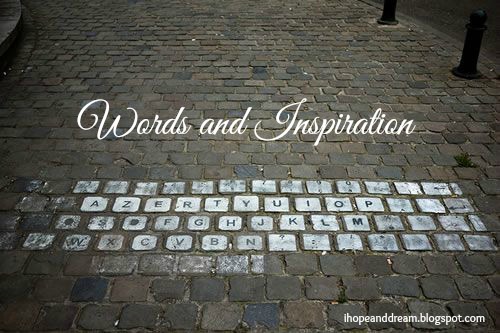
Words and Inspiration.
Where am I going with this? I really have no idea yet, other than it is 11:15 at night, which makes it 45 minutes until tomorrow. And I really want to write something, but don't know what to write. Also, I liked the picture...
Someone said the word "confide" to me earlier, and it made me wonder what the exact definition was. I use the word in writing and in real life all the time. I knew the gist of the word, and how to properly use it without sounding like an idiot. But I hadn't known the exact definition word for word. Now I do...
Confide: to tell someone about a secret or private matter while trusting them not to repeat it to others.
Hm. Okay. We all probably knew that.
Break down the word and you get the words "con" and "fide". What do those mean?
Con: Persuade (someone) to do or believe something, typically by use of deception.
(Bona) Fide: Genuine; real.
(fide isn't a real word by it's self.)
I wish I was motivated enough to look up the history of that word "confide". How do cons and fides fit into one word and create something so literal? A con isn't genuine or real. Maybe that's the beauty of it. I love words. I always have. I used to ace spelling until I started anatomy, yo. Like.... who knew muscles had such weird names with weird spellings, right?
Back to the point. If you look at words and see where they came from, how we use them, break them down into their tinier words, it's so beautiful. Like, we all use SO MANY words in a day. I type at least 2500 a day, and say a lot less than that out loud. However, have you stopped to think about the alphabet? Just twenty-four letters that make up millions of combinations to make up millions of languages and EACH language has their OWN alphabet. But the gist of the alphabet is the same through out all languages. You have so many letters that are put together to makes words; words are put together to make sentences; sentences are put together to make paragraphs; paragraphs are put together to make pages; pages are put together to make stories which make novels!
Words are beautiful. We should confide in some people, but only the fide ones. The con people aren't the goodest (it's a real word, y'all. I'm pretty sure it is...) people to confide in. Find fide people. Genuine; real. God is a fide person. He's always there to listen to our rants and pleas.
But we use words all the time. And it's easy to accidentally (or maybe not so accidentally) put those 24 letters into a combination that isn't so nice. It's easy to not use our words to glorify the Creator.
But here's some beautiful words that I love that you might want to use next time you have a conversation. You might end up with some new friends with these. ;) Or maybe it will sound good in an essay, or novel, or even when writing thoughts down in a journal. I don't know, actually. I just really love these words. So I wanted to share. And the above-ness was really random and didn't have much of a point.
BuT heRe yoU gO.
Phosphenes: (n.) the stars and colors you see when you rub your eyes.
Ectopic: (adj.) Occurring in an abnormal place or position; displaced
Salivagant:(adj.) Wandering alone.
Duende:(n.) That mysterious power of art to deeply move a person
Orphic: (adj.) Mysterious and entrancing; beyond ordinary understanding.
Lethologica: (n.) When you can't think of the word for something.
Agraphia: (n.) Writer's block.
Brontide: (n.) The low rumble of thunder.
Fernweh: (n.) An ache for distant places; a craving for travel.
Pliuviophile: (n.) A lover of rain; someone who finds joy and peace during rainy days.
Anyways...
( I wrote this a few nights ago and never posted it. So here I am, posting now. nOw.)
~Still Me.
7/05/2015
A Little Bit of Realism
Last time I gave you a definition of the word "Novel" and then took a piece out of that definition and expounded on it. I'm going to do another piece of that definition,
Definition:
Novel: a fictitious prose narrative of book length, typically representing character and action with some degree of realism.
I think the best part about books is how they help us escape from the reality around us. Though, our reality is a good place to live, because if you always have your head in the clouds, you'll miss all the wonderful things. However, it's really nice to "get away to another world" every once in a while. And books help us do that. Movies sort of do that, too, but not quite as well as books. Or at least, well-written books.
This being said, the fiction part of it is why we right. Even in Historical Fiction there's a dramatic amount of that that is fiction, stuff that never happened in History that we know of. Usually, the writer makes a fictional character to be in a historical event. Fiction is everywhere.
Our brains are programmed into thinking up fictional and theoretical situations. Stories come naturally, even to the worst of writers. Ever been a little kid, and your parents or teacher asked what happened to that cookie? Crumbs are all over your face and clothes, and yet, you still are able to come with a fictional story of how the dog jumped up and ate the cookie, tackled you and go crumbs on you, and then took off to eat the cookie.
But then what happens if ALL that you write about is fictitious? With no degree of realism? Everything you wrote was all made up in a jumble of aliens, non-existent planets where the Aliens have zero emotion and walk around like robots. And on the other non-existent planet is robots that have feelings that no humans has ever experienced. Both the Aliens and the Robots work together to conquer another non-existent planet, and then get fried by a star. But no one get hurts. Because the Aliens and Robots are immune to the star's poisonous rays of radiation.
I wouldn't enjoy reading or writing that book. It's all fantasy jammed onto paper that says nothing about "novel" other than making a certain word count.
What's the story missing?
Why does it sound so stupid? (Or maybe to you, it sounds awesome...)
Because it's all made up. It's missing the element of realism that we all want in a book. So aliens don't have emotions at all. Seem plausible. But then when that baby of that mother Alien dies, will she just turn her back on it and walk away, like nothing happened? All created things have emotions. Even animals. They just don't show it in the same way we do. Ever been around a dog that just lost his best dog friend? The two dogs have grown up together, and now his best friend is gone. What does the living dog do? It will act depressed. It's easy to see how sad the dog is. Soon after, if that dog doesn't snap out of it, then it will die, too. So if that alien loses her baby, she's going to feeling something. She won't show it like humans do, but she'll have to have something. Maybe in that, you make the first alien ever to show emotions. This, then would be the start of a long war between the Emotions and the Emotionless. We just added an element of realism.
Why can't we just have a totally ridiculous story with no realism in it? Isn't that "fiction"? Yes, it is "fiction", but it makes it awful to read if we can't relate to the story, even if all we related it a little bit. You readers will want to be able to relate. Don't make it where the reader can relate to the entire story, then that defeats the point of being to "escape". Add all the fiction you want.
"Unicorns, dragons, and elves live in a forest where they have been protected by the fairies for as long as anyone can remember. Then one day, all the fairies are taken out by a mysterious gas that kills them all. This gas isn't gas, but cigarette smoke from a very lost man who is hurting deeply. He stumbles into the forest accidentally, not knowing that he just killed all the fairies. The forest irrupts into mayhem and no one knows what to do, so they go on an evil killing spree. And that's how Unicorns, dragons, and elves came to not like humans. This is why they hide from us all the time."
That doesn't qualify for literature, by the way, but it explains why those fictional characters never show themselves. It seems realistic enough for a human to accidentally stumble upon them, and because he broken the magical force that was protecting them, all their enemies got in. Good excuse for them all to be mad at the human now. It's fictitious, and has a little bit of realism in it.
Don't add too much realism, where it isn't an "escape" for the reader. And don't add not enough realism where the reader can't relate.
I think I repeated myself several times... *shrugs*
6/25/2015
Representing Character and Action
Novel: a fictitious prose narrative of book length, typically representing character and action with some degree of realism.
I'm going to focus on the bold part, and then will write posts on all the rest of that definition later on. One little part at a time.
In my last post, I mentioned that writing was an art. Anything that expresses your creativity is art. Therefore, writing is art. Novels are a piece of artwork, and deserve to be recognized as such. Even those books that don't deserve to even be called Literature. But that's beside the point.
I feel like in modern literature, writer's miss the most important part of a story. They miss the most epic, most creative part. And that makes their piece of art dull and lifeless. What's the part that most writer's miss? Character. Lots and lots of character. Not just the "people" kind of character, but the "character" one builds within themselves. This "character" makes the "character" who s/he really is. It's what we should be building the story upon. The "character" of the entire story shapes the novel. It creates both the Characters a person, and the plot.
If any other writer is like me, I start several rough drafts of different novels, and then jump back and forth between them. I don't do this a lot anymore, because it's stressful, and you can't put time into the story like you need to. In this process of jumping back and forth and not really caring, the characters get put on the backburner, and the writer tends to focus more on the story goal and plot. I feel like that is what happened in Veronica Roth's book Divergent. As much as I really liked the first book, I felt like the second and third were focused more on the plot, than on Tris and Tobias. I thought Tris and Tobias had a lot of potential in become strong characters. I got excited after reading the first book, thinking that the next two would be better. There was so much character development in the first book, I expected it to continue. Instead, it fell flat, and I was greatly disappointed. I told myself that I would never do that to a reader. It might not turn out like that in the end, but maybe I can try. That's all that counts, right? The combining of both is FATAL. I repeat: FATAL.
To create a novel, one needs two things: characters, and action. They need to be able to represent both objectives in one story. Most writer's fall flat on their faces with this. They tend to lean towards either the characters, or the plot, and they seldom get them both together perfectly. I do this, too. I'm not in anyway exempt from this. I tend to lean towards creating my characters, and my plots are often flat. I have great ideas, with great potential, that never comes out great on paper. It happens to the best of us.
So then, how do we fix this?
Research.Research.Research.Research.Research.Research.Research.Research.Research.Research.Research.Research.
Study hard on what you are writing on. Learn the world and setting you are in. Spend time creating the world of the character with detailed planning and plotting. Have a plot board. Once you've outlined, then you can start writing. It's really important not to just jump into a novel blindly. It will be a weak novel if done this way.
Something else I want to briefly point out is the backstory of a strong character. A character doesn't need a detailed backstory placed inside the novel to make the character a strong character. Neither does having a detailed backstory placed inside the novel make the character a weak character. It's perfectly fine to have detailed backstories, just don't think that is how a strong character is formed. I have had character with little to no background put inside the novel and turn out just fine. I have read books where the characters were strong and my favorite, and didn't have a detailed backstory inside the novel. I like details, though. So if a writer does put a detailed backstory in the novel, I appreciate that. But their characters can still end up rather weak. So keep that little tip in mind, and maybe I will write an entire post on that someday, but today is not that day.
Here's an example of what my character development looks like at the very first stage, even before I start plotting:
Profile:
Christi Robin
First name: Christi
Last name: Robin
Age: 16
MBTI personality type: ENFJ
Alignment: Chaotic Good
Worst enemy: the government
Backstory: mother died when giving birth to her. She's
an only child. Father had been sick for years and died when she was
fourteen. The "government" came in and took Hundred Acre
Wood from her which was legally and rightfully hers. She didn't fight
it, because there was nothing she could do on her own. So she let
them make her forest into a safe place for all fictional characters
Personality: kind, loving, gentle, but also brave and
strong, and likes adventure. Very loyal to her friends, and trusts
too easily. Enjoys people.
That's just a small part of character development. There is much more involved in creating good characters that are strong and like-able
For the first part of my outlining, I usually go over small details like who the main character is, and then go over the allies. I add the villain's bio, and the setting, along with the genre, love interests (if there is any), and a rough synopsis.
The detailed outlining, I will go through each chapter and give briefly what I want to happen in that chapter to keep a general structure. Different people do it different ways.
But never forget that your novel is supposed to be the representation of BOTH the character and the plot (action). Don't lose site of one or the other.
6/18/2015
What Does It Mean To Be Artistic?
I can't draw.
I've tried over and over. Watched tutorials. Read library books on How-To-Draw ____. I just wasn't born with that ability, I guess. Where one can draw these amazing portraits of people, I can maybe get a stick figure's body to be straight. But the odds of that happening is very low.
When you think of the word "art" you think of drawing, painting, and sculpting. Italian and French artist pop into your head. Or perhaps a friend you know can draw really well, and that is who you think of. Maybe you were born with the talent of being "artistic" and can draw and paint.
When I think of the word "art", numbers fly through my head. I can hear Mozart playing in the background, and I imagine dancers performing. 5,6,7,8... and 1 & 2 & 3 & 4 &... comes to mind. Frost's beautifully crafted poems comes to my mind, or that novel that I recently read, where the Writer put so much of his heart and soul into creating a masterpiece.
art
NOUN
- the expression or application of human creative skill and imagination, typically in a visual form such as painting or sculpture, producing works to be appreciated primarily for their beauty or emotional power:"the art of the Renaissance"
- (the arts)the various branches of creative activity, such as painting, music, literature, and dance:"the visual arts"
Powered by OxfordDictionaries · © Oxford University Press
"The expression or application of human creative skill and imagination."
I really like that. When one has artistic skills and they are told they can't express it, it kills the person. Most of the time, though, people automatically think of art only as what is on that piece of paper, or up on that canvas. But it goes so much deeper. To be artistic is to express your creativity. To apply your imagination in a visual form. Dance, music, writing, painting... It isn't limited to pencil and paper. It isn't limited to paint brushes. But rather it isn't limited at all. If you're a writer, or a dancer, or a musician, you are just as much of an artist as the person in your class that can draw and will be the next Van Gough.
To express that creativity in novels is a beautiful thing. When one does world building, or character development, they are creating a form of art. When one can spend hours putting loving care into dialogue, and actually care about how that sentence sounds, it's art.
To express that creativity in poetry is a beautiful thing. I have read through so many good poets' work, and I aspire to be like them. To be able to put words together in a soul stirring form. To be able to create emotion in just a few short stanzas. It's art when one can express that.
To express that creativity in music is a beautiful thing. When one sits down at the piano, or stands up with their violin, playing their music with all their soul, it stirs something in those around them. Music really is the universal language, and it's art the way some people can stir the hearts and soul of those around them.
To express that creativity in dance is a beautiful thing. I like elegant dancing, rather than stuff like hip-hop, because it doesn't seem to create the same tranquil feel. But all dance is art in it's own way.
I could go on about what art is, and how much it inspires our world today, but I think I might end up boring you. If you need some inspiration or some "how-to's" on art other than drawing, you can look at these. :)
The Golden Poetic Soul
Story Forger
Character Development
Dialogue
Dreaming Hobbit
October's Poetic Soul
The Golden Poetic Soul
Story Forger
Character Development
Dialogue
Dreaming Hobbit
October's Poetic Soul
...be artistic...
...express yourself...
~Sarah
Subscribe to:
Posts (Atom)